Module · Recruitment and onboarding
A digital funnel for hiring and onboarding drivers
Most fleets lose candidates not at the interview but somewhere between the click on a form and the first ride. The “Candidates” module carries an application from the website, through the operator's call and a complete set of documents, to the moment the driver actually goes out on the road. Every stage has an owner and a visible status.
crm.fleetsoft.pl
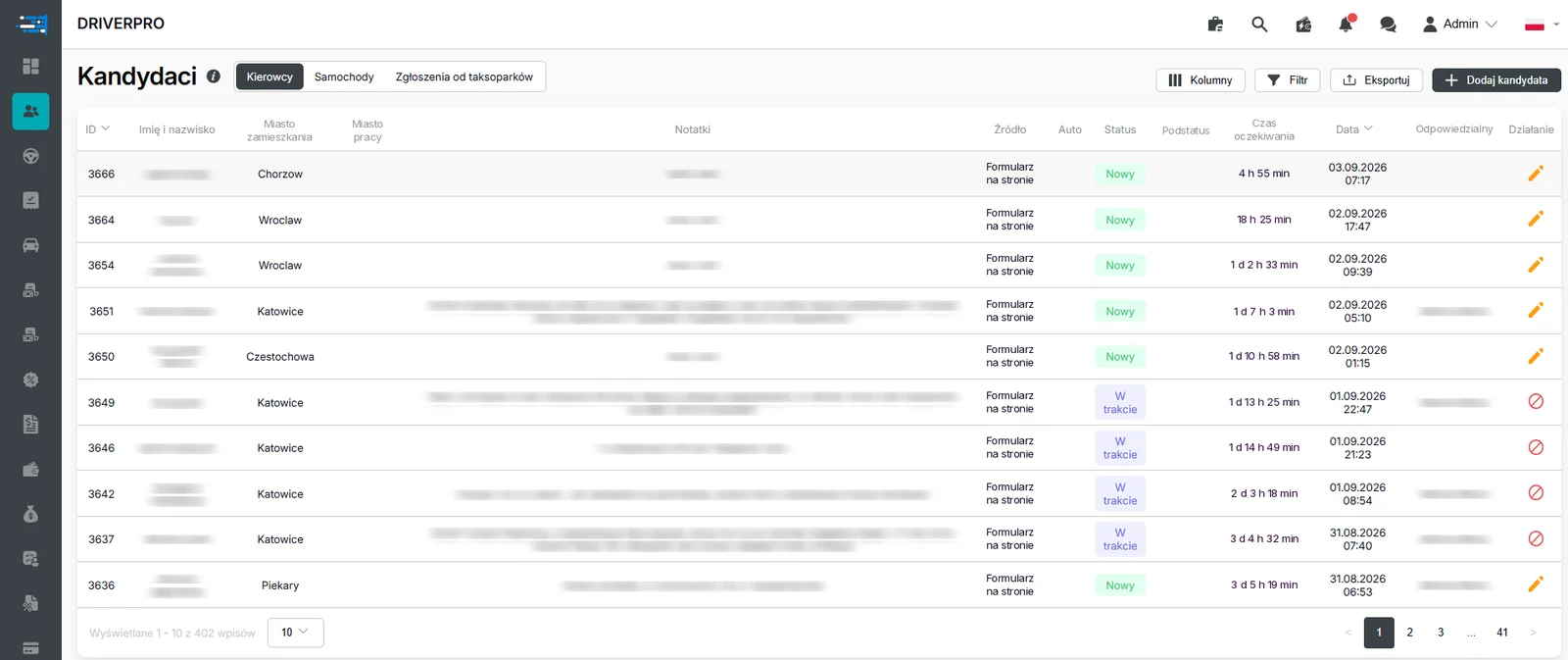
Candidates: city, lead source, status, waiting time and the recruiter in charge. Personal data hidden.
Driver recruitment for a fleet starts with two fields
A form that asks for ten pieces of information up front filters out the wrong people. Someone fills in three boxes, reaches the question about a licence number or the form of cooperation, and closes the tab. That is why the first contact on the fleet website comes down to two fields here: first name and phone number. That is enough for the application to land in the CRM and for someone to call back the same day.
Everything else — documents, experience, the city, the preferred settlement model — the system helps collect later, with an operator involved. Moving that effort from the candidate to the CRM is the point of the whole module. A short form raises the number of applications, and the full set of information still gets collected, just one step further into the process and under the eye of someone who knows what to ask about.
Driver documents without a printer or a scanner
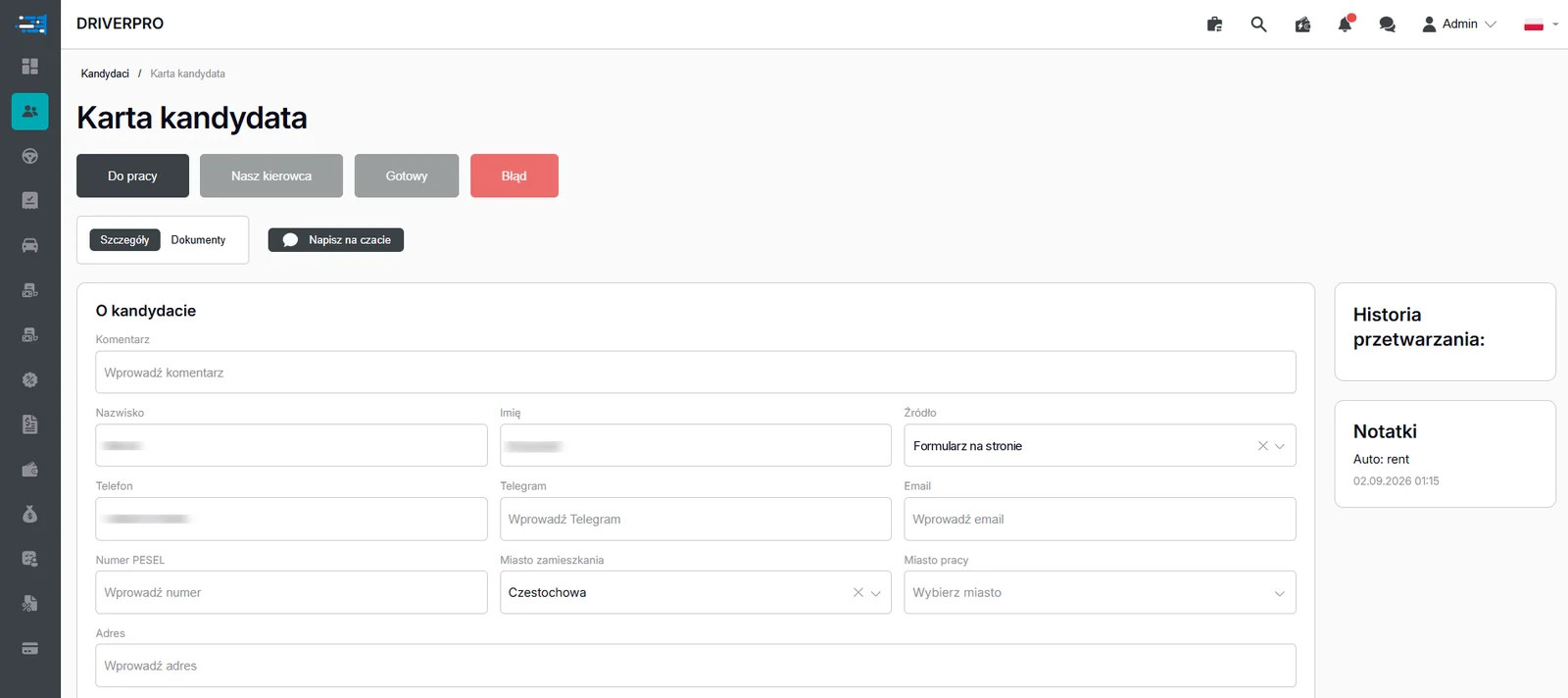
The candidate card does not end with a phone number. It is also where their documents are kept. Some of them are generated from ready templates — pick the type of document and the CRM data fills it in. Some fleets prefer to work with their own versions, refined over years and checked by a lawyer: a cooperation contract, a car rental agreement or any other document can simply be uploaded to the card.
The result is the same either way. By the time a driver starts working for Uber, Bolt, FreeNow, Glovo or Wolt, their file is complete and available to authorised fleet staff — with no digging through mailboxes, messengers and folders on someone's drive.
Frequently asked questions
Doesn't such a short form attract random people?–
The form has one job: to get a contact. Verification happens at the next stages of the funnel, where the operator talks to the candidate and collects documents. A short form does not lower your requirements for a driver — it only shortens the path to the first conversation.
How do we know who is handling a given candidate?+
Operators assign an application to themselves directly from the queue of new candidates. Every lead therefore has one owner, and the manager can see who is running the conversation and where in the funnel the candidate is.
How do we contact a candidate after the application?+
Directly from the candidate card, in one click: the system sends a message with a link to finish registration in whichever messenger suits the candidate. The rest of the conversation goes into the shared chat module, so its history stays in the CRM.
Can we use our own contract templates?+
Yes. In the driver card you can generate a document from a template or upload your own file — a cooperation contract, a car rental agreement and other documents used in your company.
Does the module also handle courier recruitment?+
Yes. The same funnel carries candidates regardless of whether they will end up driving for Uber, Bolt and FreeNow or delivering for Glovo and Wolt.